Grand Theft Auto: Vice City — When the Neon Learned to Talk
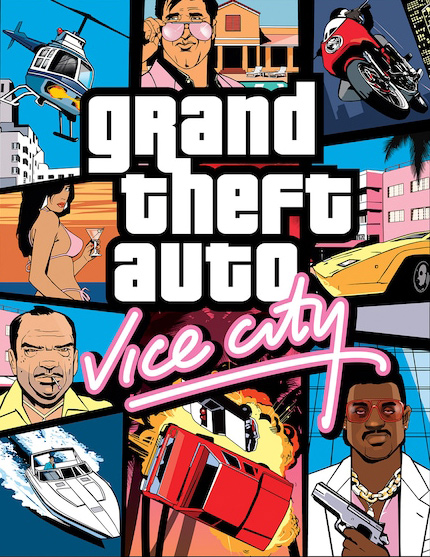
Tommy Vercetti did not arrive in Vice City as a king. He arrived as inventory.
That is the first thing the 2002 game gets right, and it is still the thing most recaps sand off. Grand Theft Auto: Vice City is remembered as sunglasses, palm trees, and a licensed-song jukebox that could fill a decade. It is those things. It is also a story about a man the Forelli family ships south after fifteen years in prison, hands a briefcase, and expects to stay a courier. The sun is real. So is the leash.
This is not a Rockstar page. GTA6 NOW is an independent fan magazine. Official dates and sales below come from contemporary reporting and later company filings. Folklore — the Scarface cosplay, the “best GTA ever” arguments, the idea that Vice City invented open worlds — is labeled as such.
Launch, platforms, and a nine-month sprint
Rockstar North announced Vice City at E3 on 22 May 2002. The studio had just shipped Grand Theft Auto III. Full production on the follow-up, Sam Houser later said, “really kicked off at the beginning of 2002” and lasted about nine months. The team had discussed a mission pack for III first — new weapons, vehicles, missions — then decided the idea wanted its own city.
North America got the PlayStation 2 disc on 29 October 2002, a week later than the original 22 October target. Rockstar pushed the date to meet manufacturing demand, not because the game was unfinished; it had gone gold by 15 October. Europe followed on 8 November. Capcom published the Japanese PlayStation 2 and Windows versions on 20 May 2004.
The Windows port arrived in North America on 13 May 2003 and in Europe on 16 May. The Xbox version shipped as part of the Grand Theft Auto: Double Pack (bundled with III) on 4 November 2003 in North America and 2 January 2004 in Europe, with Rockstar Vienna handling the Xbox work. A Mac OS X release followed on 12 November 2010. War Drum Studios built the tenth-anniversary mobile ports: iOS on 6 December 2012, Android on 12 December 2012 after a short delay, and Fire OS on 15 May 2014. PlayStation 3 received a PS2 Classics edition on 30 January 2013; PlayStation 4 got an upscaled version with trophies on 5 December 2015. The 2021 remaster sits inside Grand Theft Auto: The Trilogy — The Definitive Edition, which launched 11 November 2021.
At the time it was Rockstar North’s most expensive game: a reported US$5 million to develop and US$13.2 million to market. Those numbers look quaint next to later entries. In 2002 they were a statement.
A city that already had a name
Vice City is Miami with the serial numbers filed down and the volume turned up. The name is older than this game — it appeared in the original 1997 Grand Theft Auto — but the 1986 version is the one that stuck. Two main islands, a handful of smaller districts, bridges that stay locked until the story says otherwise. Art director Aaron Garbut later estimated the playable area at a little over 4.25 square kilometres, almost twice Grand Theft Auto III’s Liberty City.
The year is not window dressing. Clothing, cars, hair, and the radio are all 1986. The development team watched Miami Vice through production and took field trips to Miami after finishing III. Leslie Benzies called the city “a party town, all sun and sea and sex, but with that same dark edge underneath.” Sam Houser called the era “the grooviest era of crime because it didn’t even feel like it was crime.” Those are official interviews, not fan copy.
The cinematic debt is equally official and should be treated as influence, not adaptation. Scarface (1983) and Carlito’s Way (1993) were on the mood boards. So was Miami Vice (1984–1990). The game is not those films. It borrows their wardrobe and some of their moral weather, then writes its own gangster.
The man they sent south
Ray Liotta voices Tommy Vercetti. That was the series’ first fully speaking protagonist after Claude’s silence in III, and the team treated the change as a riddle they had to solve. Dan Houser described Tommy as “strong and dangerous and prepared to wait for the right opportunity to arrive.” Liotta recorded against a blue screen so the cutscene artists could watch the physical performance. Sam Houser later said some sessions were “very dark.” Director Navid Khonsari found Liotta occasionally difficult to work with. None of that is gossip invented after the fact; it is on the record.
Tommy is a Forelli soldier who did fifteen years for a murder in Liberty City. In 1986, boss Sonny Forelli — Tom Sizemore — sends him to Vice City to oversee a drug deal with crooked lawyer Ken Rosenberg, voiced by William Fichtner. The deal is ambushed. Tommy and Ken escape. The money and the product do not. Sonny’s instruction is simple: get both back, or there will be consequences.
What follows is not a revenge checklist. It is a man realizing the people who own him are far away and the people who shot at him are local.
The story, told in order
Ken points Tommy at retired colonel Juan Garcia Cortez, who helped arrange the exchange and now wants the embarrassment gone. Cortez, voiced by Robert Davi, becomes a mentor of sorts: he feeds Tommy names, then encourages him to stop waiting for Sonny’s permission. Kent Paul, a band manager with worse connections than he admits, opens doors. Lance Vance — Philip Michael Thomas — was on the original deal and lost his brother in the ambush. He wants blood and a partner.
Texan developer Avery Carrington, voiced by Burt Reynolds, hires Tommy for dirty real-estate work. Cortez also introduces drug lord Ricardo Diaz. Tommy and Lance work for Diaz long enough to confirm what they already suspected: Diaz organized the ambush. Lance, against Tommy’s advice, tries to kill him and gets captured. Tommy pulls Lance out. Together they storm Diaz’s mansion and take the operation.
That is the hinge. From here Vice City stops being a recovery job and becomes a construction project. Tommy buys failing businesses — a film studio, taxi company, clubs — and turns them into fronts. He collects protection. He builds a gang that can hold what he takes. He helps other crews when it suits the expansion. Cortez, hunted by French agents, leaves on a yacht; Tommy covers the departure and is asked to look after Cortez’s daughter, Mercedes.
Sonny notices. The Forellis are not being cut in. He sends collectors. Tommy kills them. When Sonny flies south himself, Tommy tries to pay him in counterfeit. The meeting at the mansion is the film the game has been building toward: Tommy accuses Sonny of setting up the hit that put him away fifteen years earlier; Sonny reveals that Lance, feeling small in Tommy’s shadow, has sold him out. The shootout ends with Lance and Sonny dead. Tommy and Ken, standing in a house full of other people’s money, talk about the future as if the city now has a single owner.
That is the official plot. Folklore likes to call it Scarface with missions. The rhyme is obvious. The difference is the ending: Tony Montana dies in his foyer. Tommy lives, and the game lets you keep driving.
Set pieces people still argue about
The opening ambush is the thesis. You are not powerful yet. You are standing in a deal that was never yours.
The mission actually called Mall Shootout — Cortez sends Tommy to Washington Mall for stolen guidance chips — is the Saturday-afternoon picture: a food-court ambush by French intelligence, then a motorcycle chase off the concourse. Phnom Penh ’86 puts Tommy in a Hunter over Prawn Island with an M60. I Scream, You Scream, for Umberto Robina’s Cubans, plants a bomb in a Mr. Whoopee ice-cream van and lets the jingle do the joke. The Haitian jobs for Auntie Poulet are the other half of that war; the game lets you work both sides, which is why the later protests had a specific target.
InterGlobal Films is the property people still replay: Steve Scott needs a leading man, a stunt, a bank job staged like a production. Love Fist — Kent Paul’s Scottish hair-metal clients — hire Tommy for security, groupies, and a limo that may be wired. The Diaz mansion raid (Rub Out) is the first time the city feels like a siege. Cortez’s yacht departure, All Hands On Deck, understands boats as drama. The final mansion shootout is the one players still quote: not because the gunplay is modern, but because Lance’s betrayal is personal.
Buy a business, do its dirty work, watch the income tick. The vigilante, paramedic, firefighter, and taxi jobs are carryovers from III, but they sit better here because the city has a costume.
The radio is the city
Vice City’s radio is not accompaniment. It is the argument that 1986 was a real year. More than 113 songs and commercials, about nine hours of music, eight thousand lines of dialogue — four times III. Epic Records issued a seven-disc official soundtrack box set alongside the game, one disc per station.
V-Rock, hosted by a younger, long-haired Lazlow, is the glam and metal station. Wave 103, hosted by Adam First, is the new-wave argument: Frankie Goes to Hollywood, Tears for Fears, Blondie, A Flock of Seagulls. Flash FM, hosted by Toni, is the top-forty station people still put on road-trip playlists — Hall & Oates, Michael Jackson, The Outfield, Laura Branigan. Emotion 98.3, Fever 105, Wildstyle, and Radio Espantoso cover the rest of the dial. Talk radio, including K-Chat and VCPR, is louder and stranger than III’s; Dan Houser said the callers were pushed toward extremity, drawing on Lazlow Jones’s real talk-radio experience.
If you remember Vice City as a feeling before you remember a mission, that is the radio doing its job.
What was new
Motorcycles. A speaking lead. Properties that pay. Multiple missions available at once. A first-person view when aiming a sniper rifle or rocket launcher. Drive-bys with the camera swung to the side. A wanted system that still tops out at six stars, now in a city that looks like a postcard until the helicopters arrive.
None of this reinvented the III template. It dressed the template so completely that a lot of players remember Vice City as the first of its kind. Officially, III did the heavy lifting. Vice City did the personality.
Aftermath: sales, protests, ports, remasters
Vice City sold more than 500,000 copies in twenty-four hours and 1.4 million in two days, the fastest-selling game on record at the time. It was the best-selling game of 2002 in the United States. The PlayStation 2 version alone later accounted for 14.2 million copies; across platforms the game had sold 17.5 million by March 2008. It earned a UK “Diamond” award for more than a million sales.
Metacritic logged 95/100 on PlayStation 2 from 62 reviews. It won Console Action/Adventure Game of the Year at the Interactive Achievement Awards and dominated the first British Academy Games Awards. The Golden Joysticks gave it Ultimate Game of the Year.
The controversies were not theoretical. In November 2003, Haitian-American groups protested in New York over missions and dialogue that targeted Haitian and Cuban gangs. Rockstar apologized and, after pressure from Mayor Michael Bloomberg, removed specific lines from later copies. Australia originally received a pre-edited MA15+ version; an uncut edition arrived in 2010. Lawsuits after real-world murders — including the Devin Moore case in Alabama — named the game among other defendants. Those cases are public record, not proof of causation.
The Definitive Edition remaster in 2021 was widely panned for character models, bugs, and art direction that sanded off the original’s grit. The originals were briefly pulled from digital stores, then restored as a bundle on the Rockstar Store. Fan reverse-engineering projects (reVC) drew DMCA complaints from Take-Two in 2021. In January 2025, a Russian “NextGen Edition” that rebuilt Vice City inside Grand Theft Auto IV’s engine had its trailer and YouTube channel taken down. Former technical director Obbe Vermeij publicly defended the takedown while conceding the official remasters had not been competent.
Why it still points at November
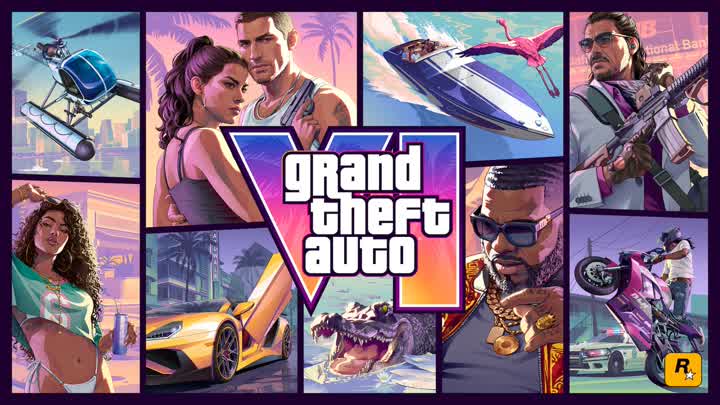
Vice City is coming back. Not this Vice City — a modern one, in a new state called Leonida, with a new pair of leads. Officially, Grand Theft Auto VI is a different continuity’s Miami. Folklore will try to make Tommy the secret of that game. There is no official evidence for that, and the Vintage Vice City Pack that ships with VI pre-orders is cosmetic nostalgia, not a plot leak.
What it bequeathed the series is simpler: a city that feels like a year, a protagonist who talks, a radio that argues, and a finale that treats betrayal as more interesting than a bigger gun.
Independent fan site; not affiliated with Rockstar or Take-Two.
Also in this series: GTA VI · GTA V · GTA IV · San Andreas · GTA Games
 What GTA 6 Fans Are Talking About Before November 19
 Tribunal filing: Rockstar treated a 32-player online format as a secret
 IGN's GTA 6 theft tape: cloners, search cones, and the two-second grab is gone
 Console shortages will not pull GTA 6 onto PC with the consoles
 Glasgow filings describe a 32-player GTA 6 Online session