
GTA 6 Trades Frictionless Chaos for Red Dead 2 Physical Weight
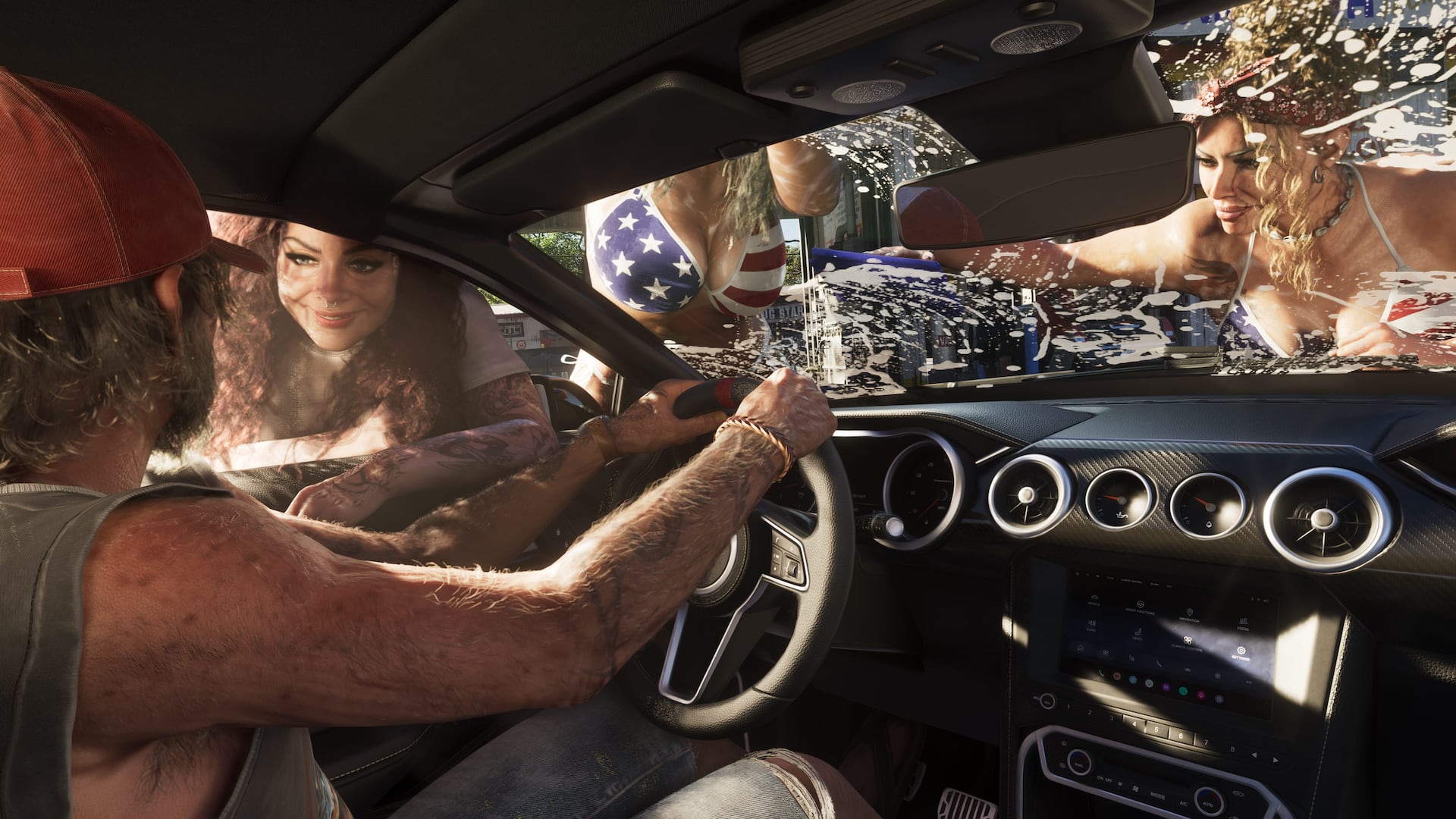
Grand Theft Auto VI departs from GTA 5 arcade detachment by layering biological stamina decay, civilian smartphone reporting, and interior logistics into Leonida. By forcing players to manage physical exhaustion and persistent heat, Rockstar introduces deliberate open-world friction to urban rampages.
Creator preview Preview breakdowns reveal biological fatigue, ambient civilian phone tracking, and interior hold-ups across Leonida.
Early trailer audits and preview breakdowns from outlets including IGN catalog over 250 distinct vehicles, report roughly 600,000 motion animations, and chart a state map estimated at three times the size of Red Dead Redemption 2. Those technical breakdowns establish the underlying design thesis: GTA 5 street chaos fused directly with Red Dead Redemption 2 biological weight. Pulling off a convenience store robbery or speeding along Ocean Drive is no longer an isolated, consequence-free arcade loop.

For over a decade, Los Santos let players sprint indefinitely on broken bones, spray-paint a sedan to clear murder charges, and swallow rocket fire without breaking stride. Leonida imposes stricter physical rules. Systems highlighted across preview reporting show character models reflecting sustained exertion, skipped sleep, and caloric intake, forcing bodily consequences into everyday gunfights.

Jason and Lucia body conditioning and Leonida interiors
Diet shifts character mass, gym sessions build muscle definition, and multi-day benders leave visible exhaustion across Jason and Lucia's faces. Where GTA V let players absorb shotgun blasts and sprint uphill after eating a snack, Leonida removes that rubber-band recovery. Depleted stamina directly hampers weapon sway and sprint recovery, turning prolonged shootouts into tactical liabilities.

This physical weight extends to the map itself. Instead of treating roadside bodegas as sealed set dressing, Rockstar Games built enterable interiors across commercial strips and suburban apartments. Running inside a Port Gellhorn shop during an active pursuit triggers no instanced cutscene; you enter the doorway, kick open the back exit, and navigate interior geometry while the pursuit continues unbroken.

Jason and Lucia mid-chase switching and vehicular police AI
When high-tier pursuits trigger across the highway system, players can fluidly swap between Jason and Lucia mid-chase. While the AI partner steers through oncoming traffic, the player leans out of the passenger window to deliver targeted suppressive fire, replacing the rigid, one-handed drive-by aiming used since GTA IV.
That coordination is essential because law enforcement no longer loses interest behind an alley dumpster. According to preview breakdowns, patrol units track vehicle descriptions, license plates, and physical apparel. Swapping cars in plain view of a cruiser fails to drop wanted stars, forcing drivers into line-of-sight concealment before any spray shop can wipe the slate.
Leonida in-game social media feeds and pedestrian smartphone cameras
The world also talks back through ambient technology. As analyzed by GameSpot and Polygon, Rockstar framed Leonida's debut around vertical video feeds, livestream captures, and bystander smartphone footage. That framing operates as a mechanical alert network: walking down a crowded boulevard brandishing a rifle prompts bystanders to record and notify dispatch before shots are fired.
Where GTA V ran civilian reporting on an invisible background timer, Leonida places surveillance directly into the crowd's hands. Bystander recordings feed into in-game social networks, creating a visible trail of criminal activity where a pileup on Vice Beach produces live digital evidence that speeds up police response times.
PlayStation 5 30 fps targets and character stamina mechanics
This systemic commitment creates the central product tension for GTA 6 realism vs arcade gameplay. One side welcomes mechanical resistance where robberies require preparation and vehicle handling carries physical inertia. The counterweight is franchise memory: the uninhibited id of seizing any car on the asphalt, blowing through red lights, and sustaining five-star mayhem without managing character stamina or animation commitments.

Early tech audits from Eurogamer's Digital Foundry note that dense crowd simulations, ray-traced lighting, and layered animation pipelines point toward a locked 30 frames per second experience on baseline consoles. Can that 30-frame budget and heavy biological stamina sustain the frantic getaway loops players spent a decade mastering in Los Santos, or will Vice City turn every spontaneous freeway rampage into an exhausting tactical chore? The answer hinges on the next gameplay demonstration on the Rockstar Newswire, where Rockstar must prove that physical friction enhances the crime spree without strangling it.

GTA 6 Is Locked for 19 November 2026. Six Wagers Are Still Wagers
News
GTA 6 Cash Is Physical Until You Bank It, and Story Missions Wait
News
Lucia and Jason in GTA 6: What Trailers Show and What Fans Added
News / Rumors
Take-Two sealed a Discord subpoena after Rockstar called Cyberleek heartbreaking
News
A Botched Score Turns GTA 6 into a Statewide Conspiracy
Trailers Police who keep your face will not settle GTA VI's writing fight
 What GTA 6 Fans Are Talking About Before November 19
 Tribunal filing: Rockstar treated a 32-player online format as a secret
 IGN's GTA 6 theft tape: cloners, search cones, and the two-second grab is gone
 Console shortages will not pull GTA 6 onto PC with the consoles